The Best Password Manager for Families, Ranked by Cost per Person
Affiliate disclosure: some links here are affiliate links and we may earn a commission at no cost to you. The order below follows the stated criterion and nothing else; no vendor paid for a position or saw this page before it went up.
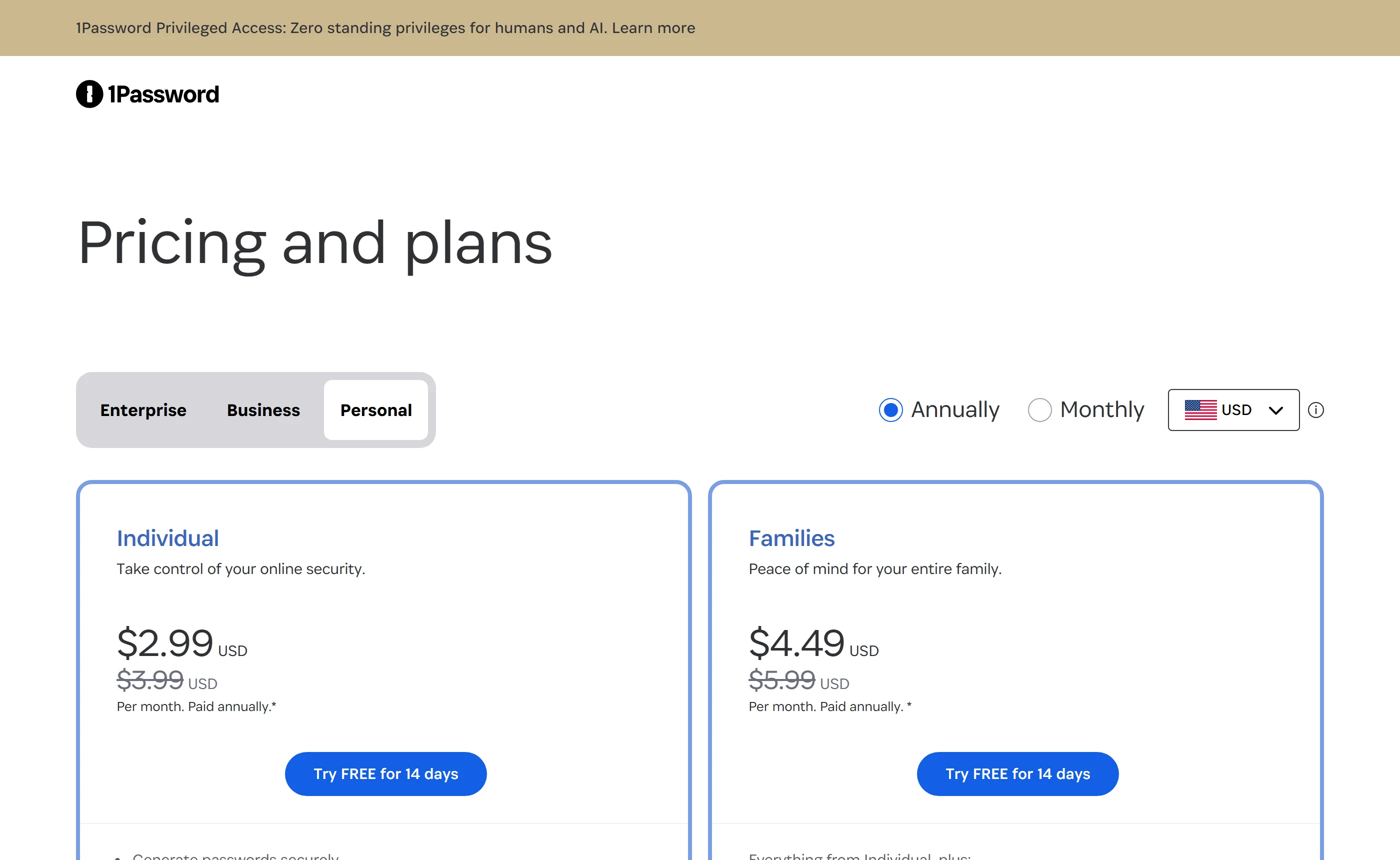
A family password manager comes down to four questions, not one: what it costs per person, how many people it actually covers, whether sharing and emergency access work for everyone on the plan, and what happens to everyone’s vault when the person paying stops paying. The short answers: Bitwarden Families is the cheapest standing price at $47.88 billed annually for up to six users, $7.98 each per year, with a permanently free plan underneath it. Proton Pass Family is next, $59.88 every 12 months for six Pass Plus accounts. 1Password Families costs more, $4.49 a month paid annually for five members and $5.99 after the first year, and is the only plan here whose organiser can recover a locked-out member’s account. If you only need two people covered, the free tiers may end this search without a purchase.
This page ranks ten password managers from pricing pages read on 17 September 2026. Nobody installed or subscribed to anything; this is a comparison of what vendors publish. Where a vendor does not publish something the ranking needs, the gap is reported and costs it position instead of being filled with an estimate, which happens more than you would expect. Six of the nine vendors selling a family plan publish no renewal price at all, three publish no refund window, and none states what becomes of a family vault when the family plan ends.
What this ranking measures
This ranking measures four things: what the family plan costs per person, how many accounts it covers, how sharing and emergency access actually work for the people on those accounts, and what the vendor publishes about the vault once the organiser stops paying. First-term and renewal prices are scored separately everywhere, so a plan that prints its renewal figure gains on one that prints only an opening offer, however low that opening offer is. Deliberately not measured: autofill quality, app design, speed, feature counts and breach history. Those matter, but none of them decides whether a family plan works, and none can be read off a pricing page. Where a vendor publishes nothing the criterion needs, as with Enpass on sharing and NordPass on renewal, that silence is the finding and it costs them places.
The short answer
$47.88 billed annually for up to six users works out to $7.98 per person per year, the lowest standing per-seat price here, and it is a standing price: no struck-through figure, no promotional wording, no first-year qualifier. All six seats are premium accounts, so all six get emergency access and unlimited sharing, and the permanently free plan below it caps neither passwords nor devices if the subscription ever ends.
$59.88 every 12 months for six users is $9.98 each per year, and every seat is a full Pass Plus account rather than a reduced member tier, so Emergency Access, item sharing and secure link sharing reach everyone. Proton Free keeps unlimited logins, notes and cards on unlimited devices as the landing zone, and every paid plan carries a 30-day money-back guarantee.
Bitwarden’s free plan has unlimited passwords, unlimited devices and sharing with one other person through a free organisation; Proton Free adds two vaults shared with two others. What a family plan buys on top of that is multi-person sharing and emergency access. If your household is two people who share one streaming login, you are paying to close a gap you do not have.
All 10 compared
| # | Product | Best for | Price from | What decides its place | |
|---|---|---|---|---|---|
| 1 | Six people who want the price to stay put | $3.99 per month / Up to 6 users / Billed annually at $47.88 | $47.88 a year covers six people, $7.98 each, with no first-term rate | Visit | |
| 2 | Families who want aliases and emergency access | $4.99/month (struck-through $6.99, “29% OFF”) — “Billed at $59.88 every 12 months.” | $59.88 every 12 months for six Pass Plus seats, $9.98 each | Visit | |
| 3 | A household with one designated fixer | $4.49 USD Per month. Paid annually (regular price shown: $5.99 USD) | Five seats, and the renewal price is printed: $5.99 a month | Visit | |
| 4 | Six cheap seats, if you read the terms first | $4.00 /month billed annually* | Six Premium seats at $4.00 a month, about $0.67 per person | Visit | |
| 5 | Knowing the second-year bill before you buy | $2.66 /mo Billed annually ($3.98 struck through) — “New users: $31.95 for the first year”, “Then renews at $47.75/yr” | $31.95 the first year, then renews at $47.75/yr, five seats | Visit | |
| 6 | Ten people on one subscription | $8.13 Per month for 10 members Billed annually | Ten members at $8.13 a month, about $0.81 per person | Visit | |
| 7 | Shared folders and estate-planning access | $91.99 (billing period not stated) | $91.99 for five users, with no billing period published | Visit | |
| 8 | Vaults stored in your own cloud account | $3.29 /month ($4.39 struck through) — “Billed annually at $39.59 with your discount, then $52.79, billed yearly” | Renewal published: $39.59, then $52.79 a year, for six accounts | Visit | |
| 9 | Cheap 27-month terms, if you accept the risk | $2.49/month — “$161.73 $67.23 for the first 27 months” (2-year plan, 6 user accounts) | $67.23 for the first 27 months, then no published price at all | Visit | |
| 10 | Desktop-only households who will never pay | Free and open source — no paid tier and no family plan | No family plan, no accounts, and no subscription that can lapse | Visit |
1. Bitwarden
Why it sits at 1 $47.88 a year covers six people, $7.98 each, with no first-term rate
Families is $3.99 per month, billed annually at $47.88, for up to six users, which is $7.98 each per year and the lowest standing per-seat figure in this comparison. Standing is the point: the pricing page carries no struck-through number, no promotional wording and no first-year qualifier. Sharing is unlimited across unlimited collections, and because all six seats are premium accounts, all six get emergency access.
If the plan ends, the free plan beneath it caps nothing: unlimited passwords, unlimited devices and encrypted export. Bitwarden publishes a renewal rule rather than a renewal number, stating that an agreed price holds for the payment term, that prices may change at the end of a term, and that users get at least 30 days’ notice of material changes. The 30-day refund policy is real but lives in the Terms of Service, not beside the price.
- Cheapest standing per-seat price here, and the free plan below it caps neither passwords nor devices.
- No vendor-side recovery at all: forget the master password with no emergency contact or recovery option configured in advance and the account has to be deleted and recreated.
2. Proton Pass
Why it sits at 2 $59.88 every 12 months for six Pass Plus seats, $9.98 each
Pass Family is $4.99 a month, billed at $59.88 every 12 months, for up to six users, which is $9.98 each per year. Each person gets a full Pass Plus account plus a family admin panel, not a stripped member tier, so every seat carries Emergency Access, item sharing, secure link sharing, vault sharing with up to 10 others and unlimited hide-my-email aliases.
Stop paying and Proton Free still holds unlimited logins, notes and credit cards on unlimited devices, narrowing you to two vaults, sharing with two others and ten aliases. Every paid plan carries a 30-day money-back guarantee. Recovery centres on a 12-word phrase: email and SMS reset the password but do not restore the encrypted data. The struck-through $6.99 is the monthly-billing rate rather than an expiring discount, though no renewal price is stated in words anywhere.
- Every seat gets Emergency Access and full sharing, and the free plan keeps unlimited stored items.
- The pricing page never states a renewal figure in words, and the monthly-billed rates sit behind a toggle rather than being labelled.
3. 1Password
Why it sits at 3 Five seats, and the renewal price is printed: $5.99 a month
Families is $4.49 USD “Per month. Paid annually” for up to five members, with the regular $5.99 USD printed beside it and fine print confining the promotional rate to new customers subscribing directly through 1Password.com, for the first year with annual billing. That is $0.90 per person per month in year one and $1.20 from year two. Almost nobody else here lets you do that arithmetic before paying.
It answers the recovery leg outright too. Account recovery is administered by the family organizer or a holder of the Recover Accounts permission, issues a new Secret Key and requires saving a new Emergency Kit, and 1Password advises that at least two people in a family be able to run it. Items can also be shared with people who do not use 1Password, with expiry. What costs it the top two places: there is no free plan at all, only a 14-day trial, and refunds are ruled out for past charges and for unused time.
- The only family plan here where an organiser can actually recover a locked-out member’s account.
- No free tier to land on and no refund window: the policy states refunds are not issued for past charges or for time remaining at cancellation.
4. LastPass
Why it sits at 4 Six Premium seats at $4.00 a month, about $0.67 per person
Families is $4.00 a month billed annually for six Premium accounts and a group manager dashboard, about $0.67 per person per month, level with Bitwarden as the lowest per-head figure here. Premium is what carries one-to-many sharing, emergency access and unlimited device types, and all six seats have it. Free means one user, unlimited passwords and one device type, computer or mobile, not both.
LastPass is also the only vendor here that writes down an account converting to a free plan, although that sentence covers the end of the Premium trial rather than a lapsed Families plan. Against it: payments are described as final and non-refundable, no renewal figure is published anywhere, the terms concede that discounted or promotional pricing may expire on renewal, and not renewing requires notice at least 30 days before the term ends. LastPass also discloses the 2022 theft of a backup of customer vault data, which is context rather than the reason for its rank.
- The clearest published statement in this comparison of an account converting to a free plan.
- No money-back window, no renewal figure, and cancelling requires 30 days’ notice before the term ends or it renews automatically.
5. RoboForm
Why it sits at 5 $31.95 the first year, then renews at $47.75/yr, five seats
Family covers up to five Premium accounts and RoboForm publishes the entire shape of the deal in one place: $3.98/mo struck through, $2.66/mo active, billed annually, “New users: $31.95 for the first year”, “Then renews at $47.75/yr”. That is $6.39 per person in year one and $9.55 per person per year afterwards, and it is the plainest renewal disclosure of the ten.
Emergency Access through nominated trusted contacts is the published recovery route, and the free plan keeps unlimited passwords but on a single device, with breach monitoring capped at five email addresses. What holds it back is what is missing: the free column’s per-row marks are drawn client-side and do not resolve, so no free-tier sharing allowance can be stated; the site publishes no SOC 2 or ISO 27001 claim; and “Master Password restore” is listed as a feature with no published procedure behind it.
- Both the first-year price and the renewal price are printed on the page, in dollars.
- No published procedure for a forgotten master password, and no statement of whether a reset destroys the vault.
6. Dashlane
Why it sits at 6 Ten members at $8.13 a month, about $0.81 per person
Friends & Family is $8.13 per month for 10 members, billed annually, about $0.81 per person per month. That is the lowest per-head figure of any plan here and the largest household covered, and both paid personal plans advertise unlimited stored passwords, unlimited devices and unlimited secure sharing. The seats are not equal, though: only the plan manager receives the bundled VPN.
The other two legs go badly. There is no free tier at all, since Dashlane discontinued it along with monthly subscriptions on every plan, so every advertised per-month price is a year’s commitment. No renewal figure exists anywhere; the pricing-change FAQ says only that new prices apply automatically at renewal, and the current prices took effect starting mid-February 2026. Admin-assisted recovery is a professional-plan feature, so a family member needs a 28-character recovery key enabled beforehand, and inactive vaults are deleted after 13 months following notice.
- Ten members on one subscription, the largest seat count here, at the lowest per-person figure.
- No free tier to fall back to, no published renewal price, and inactive vaults are deleted after 13 months.
7. Keeper
Why it sits at 7 $91.99 for five users, with no billing period published
The Family Plan covers up to five users and cannot be extended to a sixth, and Keeper publishes the price as $91.99 in its own knowledge base with no billing period attached, while the same article prints “$42.99/yr” for the single-user plan. Read as annual it is $18.40 per person per year, more than double Bitwarden’s. Read any other way it is not a number a buyer can plan around.
What the plan does answer is sharing and emergency access: unlimited shared folders, records and permissions, 10 GB of secure file storage, and emergency access for estate planning. Recovery is a 24-word recovery phrase and nothing else, and losing it along with the master password makes the vault permanently unrecoverable. The free plan is absent from the pricing page entirely, lives only in a support article, is reachable only by letting a trial lapse, and allows 1 mobile device and 10 records with no sync, sharing, browser extension or web vault. Fees are nonrefundable.
- Unlimited shared folders and a named emergency-access feature on the family plan itself.
- The family price is published without a billing period, and the fallback free plan holds 10 records on one mobile device.
8. Enpass
Why it sits at 8 Renewal published: $39.59, then $52.79 a year, for six accounts
Family is the one Enpass plan with its renewal on the page: $4.39/month struck through, $3.29/month active, “Billed annually at $39.59 with your discount, then $52.79, billed yearly”, six accounts. That is $6.60 per person in year one and $8.80 after, published in full, which is more than the Premium plan manages, since Premium shows no renewal price at all. Vaults sync through your own iCloud, Google Drive, OneDrive, Dropbox, Box or Nextcloud rather than Enpass servers.
Then half the criterion goes missing. Enpass publishes no sharing capability and no sharing limit for the Free, Premium or Family plans: “password and file sharing” appears only under the Business plan and the personal comparison table has no sharing row at all. There is no personal account recovery, so losing the master password destroys access, and the admin-side access recovery feature is business-only. The free plan holds 25 items in one vault, which is not a landing zone for a real family vault. The 30-day refund sits in the Terms of Use, not on the pricing page.
- Publishes the family renewal price, $39.59 then $52.79, on the pricing page itself.
- No sharing row for personal plans and no emergency access, trusted contact or recovery mechanism of any kind on a family plan.
9. NordPass
Why it sits at 9 $67.23 for the first 27 months, then no published price at all
Family on the default two-year tab is $2.49/month, billed “$161.73 $67.23 for the first 27 months”, covering six user accounts, about $11.21 per person across those 27 months. The word “first” carries the weight. No renewal price appears on the pricing page or the linked discount terms, and Nord’s general terms state that if you do not cancel, your payment method is charged the price valid at the time of the automatic renewal.
Emergency access is not listed among the features on any NordPass tier, and the comparison table’s secure sharing row did not resolve into readable per-tier marks, so no sharing allowance can be reported here. Recovery rests entirely on a Recovery Code issued at setup that NordPass does not store; lose it along with the master password and the reset erases the vault. The free plan is one user account with multi-device access explicitly marked unavailable, although item storage is uncapped. A 30-day money-back guarantee applies.
- Unlimited stored items even on the free plan, plus a 30-day money-back guarantee on paid plans.
- A 27-month first term with no published renewal price and no emergency access feature listed on any tier.
10. KeePassXC
Why it sits at 10 No family plan, no accounts, and no subscription that can lapse
KeePassXC finishes last on a criterion built around family plans because it has no family plan: no seats, no accounts, no subscription. The site says “No cloud, no ads, no subscriptions”, the licence is GPLv3 and the current release is 2.7.12. Cost per person is nothing for any number of people, and the fourth question, what happens when the organiser stops paying, has no meaning here, which is the only clean answer anyone gives.
Everything else in the criterion goes against it. Sharing is KeeShare, peer-to-peer, with a documented limitation: it does not keep group structure in sync after the initial share. There is no account recovery, no emergency access and no trusted contact, losing the key file loses the database permanently, and a changed key file is treated exactly like a forgotten password. The download page offers macOS, Windows, Linux, source and a browser extension, with no iOS or Android app, which rules it out for most households before price is discussed.
- Free forever with nothing to lapse, and version 2.7.9 holds a French ANSSI CSPN certification valid to November 2028.
- The download page offers no iOS or Android app, and there is no recovery of any kind if a key file is lost.
Which one fits your situation
Bitwarden Families, $47.88 billed annually for up to six users, $7.98 each. There is no promotional rate to fall off, and the free plan underneath keeps unlimited passwords on unlimited devices if you ever stop.
1Password Families. It is the only plan here whose family organizer can recover a member’s account, and 1Password advises that two people hold that permission. You pay for it: $5.99 USD per month paid annually from year two, five seats, and no refunds.
Dashlane Friends & Family, ten members on one subscription at $8.13 per month billed annually. Read the parity gap before you buy, though: only the plan manager gets the bundled VPN, there is no free tier to fall back to, and inactive vaults are deleted after 13 months.
RoboForm Family, which prints “New users: $31.95 for the first year” and “Then renews at $47.75/yr”, or Enpass Family, which prints “$39.59 with your discount, then $52.79, billed yearly”. 1Password also shows its regular $5.99 USD beside the promotional $4.49 USD.
Do not buy anything yet. Bitwarden’s free plan has unlimited passwords and unlimited devices and lets you share with one other person through a free organisation. Proton Free gives unlimited logins on unlimited devices, two vaults and sharing with two others. Live on that first and see what you actually miss.
KeePassXC: free, open source, no account and nothing that can lapse. Check the constraint first, because it is severe. The download page offers macOS, Windows and Linux only, with no iOS or Android app, and there is no recovery if someone loses their key file.
What this market gets people for
- Reading “$4 per month” as a monthly bill Almost every personal price in this category is annual billing expressed per month. 1Password publishes no month-to-month price anywhere on its personal pricing page and has no billing-period toggle, Dashlane states it no longer offers monthly subscriptions for any plan, and LastPass publishes no monthly rate for Premium or Families. You are committing to a year, not a month.
- Treating the advertised price as the price you will keep paying Only three of the nine vendors selling a family plan publish a renewal figure: RoboForm (“Then renews at $47.75/yr”), Enpass (“then $52.79, billed yearly”) and 1Password ($5.99 USD beside the promotional $4.49 USD). NordPass sells a 27-month first term and publishes no renewal price at all, while Nord’s terms say you will be charged the price valid at the time of automatic renewal.
- Assuming you can get your money back if it does not suit the family 1Password states it is unable to issue refunds for past charges or for time remaining at cancellation, Keeper’s terms state fees are nonrefundable and considered earned on receipt, and LastPass describes payments as final and non-refundable. The 30-day windows that do exist are often not next to the price: Bitwarden’s is in the Terms of Service and Enpass’s is in section 6 of the Terms of Use.
- Buying seats for relatives who will never set up a recovery method Bitwarden cannot reset a forgotten master password, Enpass publishes no personal account recovery at all, NordPass’s recovery code is not stored by NordPass and losing it forces a vault-erasing reset, and Keeper’s 24-word recovery phrase is the only way back in. Dashlane’s admin-assisted recovery is a professional-plan feature, not a family one. Every mechanism has to be switched on before the lockout, not after.
Questions buyers ask
Which family plan costs the least per person?
Bitwarden Families: $47.88 billed annually for up to six users, which is $7.98 each per year. RoboForm ($31.95 for the first year across five people) and Enpass ($39.59 across six) open lower, but both publish a higher renewal, $47.75/yr and $52.79/yr respectively. LastPass Families is level with Bitwarden at $4.00 a month billed annually for six seats.
How many people does each family plan actually cover?
Dashlane Friends & Family covers 10 members. Bitwarden, Proton Pass, LastPass, NordPass and Enpass each cover 6. 1Password, Keeper and RoboForm each cover 5, and Keeper states its Family Plan cannot be extended to a sixth user. KeePassXC has no seats because it has no accounts.
What happens to our vaults if the person paying stops paying?
No vendor here publishes a family-plan lapse policy, which is the biggest single gap in this category. The nearest published statement is LastPass’s, that an account converts to LastPass Free after the Premium trial ends. Bitwarden, Proton Pass, LastPass, NordPass, RoboForm and Enpass all publish a free plan; Keeper’s exists only in a knowledge-base article and is reachable only by letting a trial lapse; 1Password and Dashlane have no free plan at all.
Can a family organiser unlock someone who forgets their master password?
Only 1Password publishes that. Recovery there is administered by the family organizer or a holder of the Recover Accounts permission, issues a new Secret Key and requires a new Emergency Kit. Bitwarden has no vendor-side recovery, Enpass has none for personal plans, Keeper relies on a 24-word recovery phrase, NordPass on a recovery code it does not store, and Dashlane’s admin-assisted recovery is limited to professional plans.
Which ones give your money back?
Six publish a 30-day window: Bitwarden (in the Terms of Service), NordPass, Dashlane (personal plans only), Proton Pass, RoboForm and Enpass (in the Terms of Use). Three publish none: 1Password rules out refunds for past charges and unused time, Keeper’s terms make fees nonrefundable, and LastPass describes payments as final and non-refundable.
Is a free plan enough for a couple?
It may be. Bitwarden’s free plan carries unlimited passwords and unlimited devices and allows sharing with one other user through a free organisation. Proton Free holds unlimited logins, notes and credit cards on unlimited devices with two vaults and sharing with two others. The restrictive free plans are the ones with hard caps: Keeper’s allows 10 records on 1 mobile device, Enpass 25 items in one vault, and LastPass, RoboForm and NordPass each restrict you to a single device or device type.
What none of them publish
These are the questions a buyer would want settled that no vendor on this page answers in public. If one of them decides your purchase, ask the vendor and hold them to the answer.
- What happens to a family vault when the family plan itself lapses. Not one of the ten publishes this. LastPass’s conversion-to-free sentence covers the Premium trial, and Keeper’s free plan is described as reachable by letting a trial lapse, but neither addresses a paid family plan ending.
- Whether Keeper’s $91.99 Family Plan price is annual. The same knowledge-base article prints “$42.99/yr” for the single-user plan but attaches no period to $91.99, and the figure does not appear as readable text on the public pricing page.
- What NordPass Family costs on renewal after the 27-month first term. Neither the pricing page nor the linked discount terms states a rate; Nord’s general terms say only that you are charged the price valid at the time of automatic renewal.
- Renewal figures for Bitwarden, Dashlane, LastPass, Keeper and NordPass. All five publish a single price per plan and no second-term number, and LastPass’s terms go further by conceding that promotional pricing may expire at renewal.
- Whether Enpass family members can share anything at all. The personal comparison table has no sharing row, and “password and file sharing” is listed only under the Business plan.
- RoboForm’s free-tier sharing allowance and the mechanics of its “Master Password restore” feature. The free column’s per-row marks are drawn client-side and do not resolve to readable text, and the recovery feature is named without a published procedure or any statement of whether a reset destroys the vault.
- Whether LastPass Families’ six seats can be reassigned, and what a seventh person would cost. Neither is published.
- NordPass’s per-tier secure sharing availability. The comparison table has a secure sharing row, but the availability marks did not render as readable text, so no NordPass sharing limit is stated on this page.
- Currency behaviour. 1Password, Keeper and Proton Pass show currency switchers and the figures here are the USD view; Bitwarden and Enpass show USD only with no selector, and Dashlane’s pages state no currency or region at all.
Reading this from the other direction? LastPass Alternatives: What Leaving Actually Costs You covers the same market against a different rule.