The full review

What is ChatGPT / Codex?
ChatGPT is OpenAI's general-purpose AI assistant, and Codex is the coding agent built into it. The pitch on the Codex product page is simple: the same agent that answers questions in chat can plan and complete engineering work end to end, building features and handling complex refactors and migrations, powered by OpenAI's frontier coding models. As of this review, the plans page lists the GPT-5.6 model family, from GPT-5.6 Luna on the Free tier up to GPT-5.6 Sol Pro reasoning on the Pro plan.
Everything ships under one subscription: chat, voice, image generation, deep research, and agentic coding across web, desktop, and mobile apps.
One agent in chat, IDE, and terminal
Codex follows you wherever you write code. Inside the ChatGPT desktop app it works as a command center for agentic tasks; the Codex IDE extension brings the same agent into your editor; and the Codex CLI installs with a single npm command for terminal-first developers. All three surfaces connect through your ChatGPT account, so it is the same agent everywhere you code. The product page currently leads with a Windows download for the ChatGPT app, alongside the IDE and CLI paths.
Parallel agents, worktrees, and background work
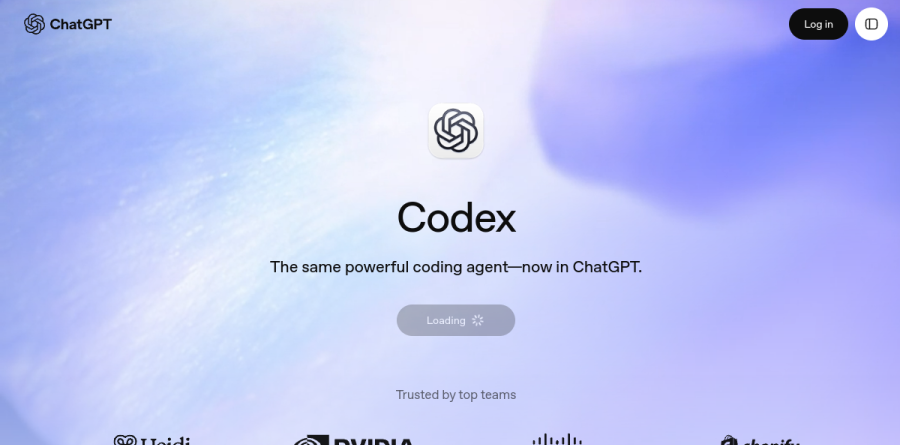
The Codex feature list reads like an operations manual for multi-agent development. Built-in worktrees and cloud environments let several agents run in parallel across projects, and OpenAI claims this compresses weeks of work into days. Scheduled runs pick up routine chores such as issue triage, alert monitoring, and CI/CD upkeep. With Skills, you teach Codex your team's standards and workflows once, and it applies them consistently with less supervision. The testimonial wall features engineers at Duolingo, Ramp, Sierra, and Cisco Meraki, with Ramp reporting that Codex PR reviews catch bugs their team would have missed and Duolingo finding it caught hard bugs that other review bots missed.
Because Codex rides on a ChatGPT subscription, the rest of the assistant comes with it. The plan comparison lists voice with video, image generation, file uploads, data analysis, deep research, memory that spans past chats, projects, scheduled tasks, and custom GPTs you can create and share. ChatGPT Work appears on every tier, from limited desktop-app access on Free and Go to desktop, web, and mobile access on Plus and Pro. Business plans add connectors for Microsoft 365, Google Drive, Slack, GitHub, Linear, and Figma, so the assistant can draw on company knowledge and internal tools.
How the plans divide up

Free covers unlimited everyday text chats with limited Codex access, enough to evaluate the agent honestly. Go widens message, upload, and image limits and lengthens memory, though OpenAI notes the plan may include ads. Plus is the sweet spot for individual developers: advanced reasoning with GPT-5.6, expanded Codex usage, projects, scheduled tasks, and custom GPTs. Pro is pitched at research and coding, with two tiers that unlock five or twenty times the usage of Plus, along with maximum Codex tasks. Business gives teams of two seats or more a secure workspace with SAML SSO, centralized administration, usage analytics with budgeting and spend controls, and a no-training-by-default data policy, while Enterprise layers on SCIM, data residency in ten regions, and 24/7 priority support.
Who should choose ChatGPT / Codex
Choose ChatGPT / Codex if you want one subscription covering both a flagship assistant and a serious agentic coding setup across chat, editor, and terminal. Individual developers get real value at Plus, heavy agent users will find Pro easier to justify, and Business fits teams that need admin controls and connectors into their existing stack. It is not ideal for teams that want a standalone, usage-billed coding agent detached from a chat product, or for organizations standardized on a different model provider end to end. Start with the Free tier's limited Codex access; the upgrade decision then comes down to how often you hit usage ceilings.
Strengths
- Bundled into ChatGPT subscriptions — no separate bill if you already pay for Plus or Pro
- Broad multi-surface delivery: terminal CLI, IDE extension, web app, and an async cloud agent
- Runs on frontier GPT-5-series models with a dedicated coding-tuned Codex variant
- Genuine free tier lets you trial the agent before committing to a paid plan
Watch out for
- Usage is metered in 5-hour rolling windows, so an intense session can hit caps mid-task
- Token/credit billing is opaque; heavy real-world cost (~$100–200/dev/mo) is hard to predict up front
- No standalone Codex plan — you buy a ChatGPT subscription or pay per-token API rates
- Business requires a 2-seat minimum and Enterprise pricing is quote-only
Key features
| Feature | What it does |
|---|
| Cloud coding agent | Delegate asynchronous tasks that run in an isolated cloud environment and can open pull requests on their own. |
| CLI + IDE extension | A terminal agent and VS Code integration for local, in-editor work alongside your existing tooling. |
| GPT-5-series models | Coding-tuned GPT-5.x (Codex and Spark variants) reason over whole repositories, not just single files. |
| Credit-based usage extension | Top up with ChatGPT credits to keep working past your plan's rolling-window limits. |
How ChatGPT / Codex compares
| Alternative | How it differs |
|---|
| Claude Code | Anthropic's terminal-first coding agent; the closest head-to-head rival on agentic quality. |
| Cursor | AI-first IDE built around an editor rather than a CLI/cloud agent. |
| GitHub Copilot | GitHub-native completion and chat; cheaper entry but less autonomous agent behaviour. |
Frequently asked questions
Is there a free version of Codex?
Yes. A limited free tier gives trial access to the Codex agent through the web app, CLI, IDE extension and iOS, but excludes the cloud task features reserved for paid plans.
Do I need a separate subscription just for Codex?
No. Codex is bundled into ChatGPT paid plans (Go, Plus, Pro, Business, Enterprise). If you prefer per-token billing, you can also access it through the OpenAI API instead.
ChatGPT / Codex ratings on other platforms
Independent user ratings from third-party review sites, linked here for transparency.
These are not our editorial score, are captured on the date shown, and may have changed since.