Antivirus That Does Not Slow Down Your Computer: What Vendors Publish
Affiliate disclosure: some links here are affiliate links and we may earn a commission at no cost to you. The order below follows the stated criterion and nothing else; no vendor paid for a position or saw this page before it went up.
A computer that stalls for ten seconds when you open a folder is a problem you can feel, and antivirus is the usual suspect. The uncomfortable answer is that almost nobody in this market publishes what their software costs your machine. None of the ten vendors below states a RAM figure, an install size or a scan duration on the pages read for this comparison.
So, the short version. Webroot is the only vendor citing a benchmark whose subject is speed: a PassMark study published 30 October 2025 across 15 Windows 11 benchmarks. Bitdefender is the only one claiming a perfect score in all three AV-TEST categories, performance included, dated February 2026. Everyone else cites detection awards, results from 2020 or earlier, or nothing at all. If your machine is already struggling, start with a free tier — Avira states its free antivirus runs the same scan engine as the paid one.
What this ranking measures
This ranking measures one thing: what each vendor publishes about system impact — stated resource use, cloud versus local scanning, minimum system requirements, and any performance test the vendor itself cites with a date. Where a vendor publishes nothing, that costs it position; “not published” is a finding, not a blank. It deliberately does not measure detection quality, feature count, interface or value for money. Nobody installed, subscribed to or benchmarked any of these products — this compares published information read on 17 September 2026. Sophos Home Premium is left out of the ten: its checkout served only Vietnamese dong for this reading and it cites no independent lab at all, dated or otherwise, so there was nothing on this criterion to compare.
The short answer
It is the only vendor in this comparison that cites a benchmark whose entire subject is system impact: a PassMark study published 30 October 2025, covering seven suites across 15 Windows 11 benchmarks. Everyone else asks you to infer speed from a detection award.
A perfect score across all three AV-TEST categories in February 2026 pins the performance category outright, and it is the only claim here that does. It loses the top spot because that citation lives in Bitdefender’s blog while the pricing page names no lab and no date.
It costs nothing, and Avira is the only vendor that states its free antivirus uses the same scan engine as the paid Antivirus Pro — so you can see what the scanner does to your machine before deciding whether the $18.99 first year, renewing at 44,99 US$ / year, is worth it.
All 10 compared
| # | Product | Best for | Price from | What decides its place | |
|---|---|---|---|---|---|
| 1 | Buyers who want a dated speed benchmark, not a badge | $37.49 /first year (Webroot Essentials, 1 Device; regular $49.99, “Save 25%”). No renewal price published. | PassMark study dated 30 October 2025: 15 Windows 11 benchmarks | Visit | |
| 2 | The newest perfect score across all three categories | USD 24.99 — “1 account - 1 device”, “First year price. Plus applicable sales tax.” No renewal figure published in words. | Perfect across all three AV-TEST categories, February 2026 | Visit | |
| 3 | A published composite score you can actually read | US$44.99/yr. (1 device); Standard “Starts from US$59.99/yr.” for 3 devices. No renewal price published. | AV-TEST 17.5 out of 18, Windows test run March and April 2026 | Visit | |
| 4 | Three dated lab citations, none with scores | “$19 first year*” (TotalAV Plus, 4 Devices) — “Automatically renews at $99/year” | AV-TEST Top Product February 2026, no category scores published | Visit | |
| 5 | Knowing where the scanning actually happens | $18.99 / First Year (Antivirus Pro, 1 PC / 1 Year) — “Automatically renews at 44,99 US$ / year” | Only dated performance citation is AV-Comparatives, April 2022 | Visit | |
| 6 | Old machines that need a stated OS floor | $49.08/first yr (Premium Security, 1 device; regular $77.99/year, “Save 37%”) | Free tier’s stated floor: Windows 7 onward, macOS 10.14+ | Visit | |
| 7 | Knowing year two’s price before you commit | $39.99 first yr. (Norton 360 Standard) — “renewal price of $94.99/year” | Newest citation, June 2026, measures detection not system impact | Visit | |
| 8 | A free tier on four platforms, TuneUp sold apart | $39.99 /first yr (Internet Security, 1 Windows PC, 1 year) — renews $77.99/year, $79.99 from 2026-10-08 | Newest dated lab citation is January 2024; TuneUp is sold apart | Visit | |
| 9 | A free Performance Scan without a purchase | $29.95 (12 months, 1 device) — RRP: $42.95, SAVE $13.00. No dollar renewal price published. | No lab result dated after 2020 on any consumer page | Visit | |
| 10 | Measuring the impact yourself, card-free for 30 days | $49.99 (1 DEVICE / 1 YEAR; $59.99 at the 3-device default) — “Price valid for the first term only.” | Consumer lab section renders as logos: no name, score or date | Visit |
1. Webroot Essentials
Why it sits at 1 PassMark study dated 30 October 2025: 15 Windows 11 benchmarks
Webroot Essentials covers one device at $37.49 /first year against a regular list price of $49.99. It leads on one fact: Webroot is the only vendor here citing a study whose subject is speed — a PassMark Software benchmark published 30 October 2025, covering seven suites across 15 Windows 11 benchmarks.
The trade-off is blunt. Webroot cites no dated protection result from AV-TEST or AV-Comparatives on any consumer page, so the evidence runs one way. It publishes no renewal price either: the struck-through figures are described as list prices, not renewal rates, and the 70-day guarantee sits on a separate refund page.
- Names its performance evidence by lab, scope and date: PassMark, 30 October 2025, 15 Windows 11 benchmarks.
- The trial page promises no credit card, while Webroot’s Consumer Terms reserve the right to require one and charge as soon as the 14 days end.
2. Bitdefender Antivirus Plus
Why it sits at 2 Perfect across all three AV-TEST categories, February 2026
Antivirus Plus is Bitdefender’s cheapest desktop entry at USD 24.99 for the first year, one account and one device. Bitdefender claims a perfect score across all three AV-TEST categories in February 2026, and performance is one of those three — the only claim here that pins the system-impact category rather than hiding it inside a composite.
It ranks second for where that claim lives. The dated AV-TEST and AV-Comparatives citations appear only in Bitdefender’s blog, while the product and pricing pages make an undated claim naming no lab at all. No renewal figure is printed anywhere in words; the struck-through $49.99 is year two only by the vendor’s own definition of a discount.
- Bitdefender Antivirus Free never expires and carries no validity due date.
- A buyer standing on the pricing page sees no lab name and no date — the dated evidence is a blog post away.
3. Malwarebytes Standard
Why it sits at 3 AV-TEST 17.5 out of 18, Windows test run March and April 2026
Malwarebytes publishes the only composite score here: an AV-TEST Top Product result of 17.5 out of 18, from a Windows consumer test run in March and April 2026. It is the only dated result here that shows a number instead of an award name — though Norton’s June 2026 AV-Comparatives citation is more recent.
It ranks third because 17.5 out of 18 never says which half point went missing — protection, performance and usability are folded together. Pricing is “Starts from” first-term only with no renewal figure on the page, and the free download is remediation for damage already done, not real-time protection.
- 60-day money-back guarantee, stated on the pricing page itself.
- Malwarebytes Free is a cleanup tool with no real-time protection, so the lightest way to run it is not protection at all.
4. TotalAV Plus
Why it sits at 4 AV-TEST Top Product February 2026, no category scores published
TotalAV Plus covers four devices at “$19 first year*” and, in the vendor’s own words, “Automatically renews at $99/year”. It carries three dated citations, all from 2026 — AV-TEST Top Product in February 2026, AV-Comparatives malware protection in March 2026 and VB100 in January 2026.
None of them carries a score. TotalAV publishes award names and dates only, so the performance component behind “Top Product” stays invisible. The cloud question arrives as a price rather than an architecture: Advanced Cloud Scanning is a separate add-on listed at a $45 annual renewal rate.
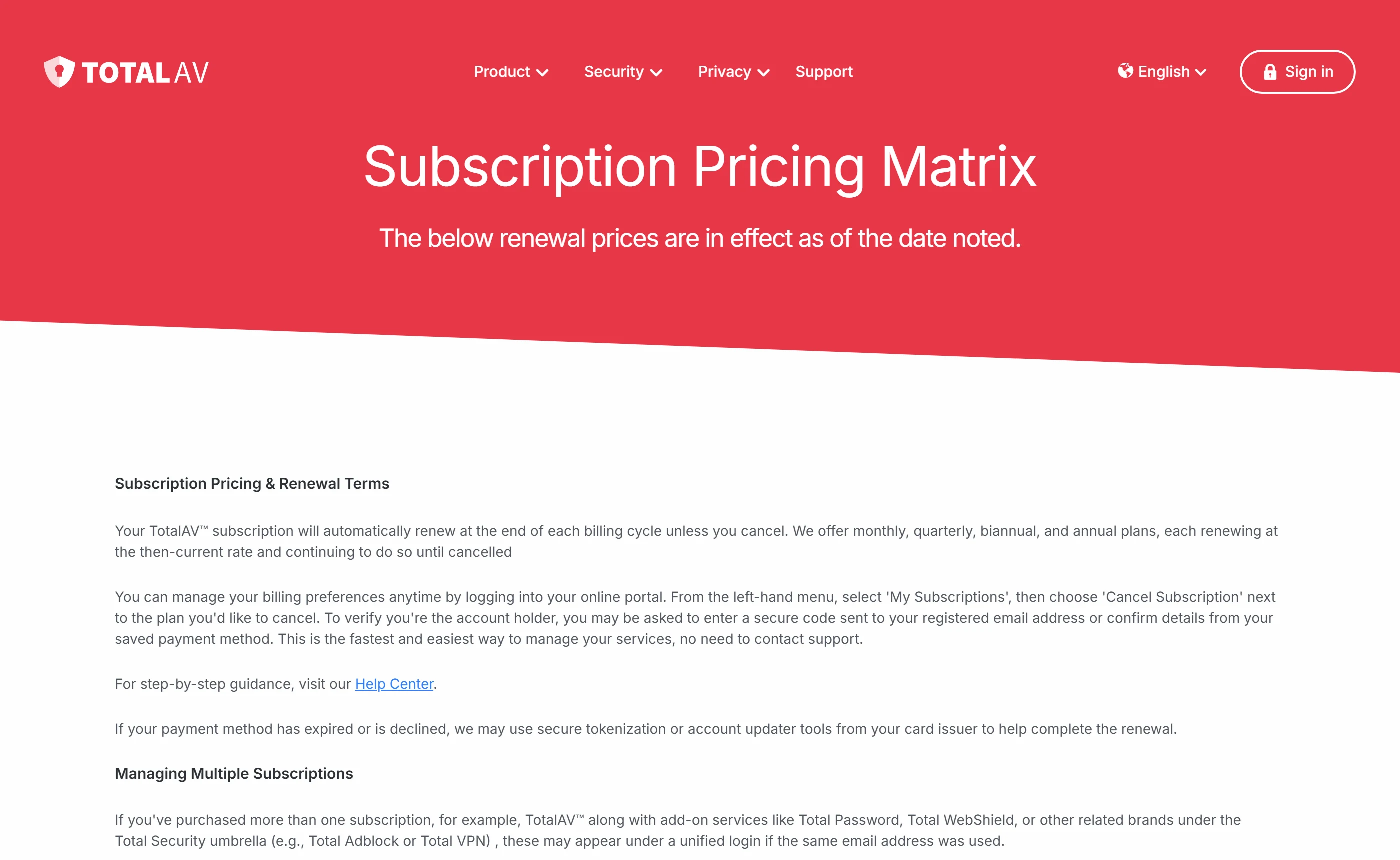
- Renewal rates are published on a dated matrix page, “Subscription renewal rates effective: 05 Jan 2026”.
- $19 for the first year to $99/year is a 5.2x jump, and neither the main pricing page nor the renewal matrix shows the two figures side by side — only the promo landing page does.
5. Avira Antivirus Pro
Why it sits at 5 Only dated performance citation is AV-Comparatives, April 2022
Avira is the only vendor here that describes how its scanning works. Avira Free Security is presented as cloud-based real-time antivirus, and Antivirus Pro adds “prioritized cloud scanning” at $18.99 / First Year, with the plan card stating “Automatically renews at 44,99 US$ / year”.
That disclosure outranks a badge, but the evidence behind it is stale: Avira’s only dated performance citation is AV-Comparatives from April 2022, alongside an AV-TEST usability award from 2021. Speed tooling is a separate purchase too — System Speedup Pro is sold on its own.
- States outright that Avira Free Antivirus and Antivirus Pro use the same scan engine.
- Its dated lab evidence stops in 2022, and the free VPN is capped at 500 MB a month, or 1 GB if you register.
6. Avast Premium Security
Why it sits at 6 Free tier’s stated floor: Windows 7 onward, macOS 10.14+
Avast Premium Security is $49.08/first yr against a regular $77.99/year, covering one PC or Mac plus one mobile device. Its contribution here is unglamorous: an OS floor. Avast Free Antivirus is listed for Windows 7, 8, 8.1, 10 and 11 and macOS 10.14 or later — the only readable minimum-requirement statement across these ten.
Its dated citations aim elsewhere. The December 2025 AV-TEST result Avast cites is the Home User Protection Test, which measures detection; the January 2026 AV-Comparatives and AV Lab entries are awards, with no underlying scores or report links published.
- A 30-day Premium Security trial on Windows and Android, 60 days on Mac.
- Avast Ultimate carries the same $49.08/first yr price as Premium Security but renews at $109.99/year instead of $77.99.
7. Norton 360 Standard
Why it sits at 7 Newest citation, June 2026, measures detection not system impact
Norton 360 Standard is $39.99 first yr. and Norton prints the renewal plainly — “renewal price of $94.99/year” — repeated on a list headed “Subscription Renewal Price List: Effective March 2026”. It also cites the most recent dated lab result here: AV-Comparatives Advanced+ Real World Protection, June 2026.
Real World Protection measures detection, not system impact, and Norton’s AV-TEST honours are listed only under 2025 with no month attached. Norton 360 for Gamers, the tier aimed at people who watch frame rates, promises gamer-focused optimizations with no figure attached to them.
- Renewal prices are published on product pages and on a dated renewal list.
- The Norton 360 Premium page renders “Savings compared to the renewal price of {ar}/year” instead of a number, and the only free route is a 7-day trial that takes a payment method and charges at the end.
8. AVG Internet Security
Why it sits at 8 Newest dated lab citation is January 2024; TuneUp is sold apart
AVG Internet Security is listed at $39.99 /first yr for one Windows PC, renewing at $77.99/year and rising to $79.99 on 8 October 2026 in AVG’s own price-change table. AVG AntiVirus FREE is a genuine free tier across Windows, Mac, Android and iOS, restricted to personal and family use.
On this criterion AVG is thin. Its newest dated citations — AV-TEST Best Protection and AV-Comparatives Top Rated — are both January 2024 and both about detection. Performance tooling is a second purchase: AVG TuneUp renews at $65.99 for one PC, $69.99 from 8 October 2026.
- A 30-day Internet Security trial with no credit card needed.
- The $39.99 first-year figure is readable only on the Internet Security product page; the store listing, where the purchase is actually made, shows just “Save 40%” in readable text.
9. Trend Micro Antivirus+ Security
Why it sits at 9 No lab result dated after 2020 on any consumer page
Antivirus+ Security is $29.95 for 12 months on one device against an RRP of $42.95. Trend Micro runs the largest set of permanently free tools here — twelve of them, including a Performance Scan and HouseCall — so a slow machine can be inspected before any money moves.
The published evidence is the oldest in this comparison. The lab results cited on the Maximum Security page are dated 2014, 2018 and 2020, the AV-Comparatives anti-phishing certification is from 2020, and nothing on the consumer pages is newer. Gaming mode on Internet Security carries no figure at all.
- Twelve free tools, including a Performance Scan and HouseCall, need no purchase — though three of them (ScamCheck, VPN, ID Protection) also exist as paid products.
- Three of the four suite tiers only reach their advertised price with a coupon code entered at checkout, and no dollar renewal price is published for any tier.
10. ESET HOME Security Essential
Why it sits at 10 Consumer lab section renders as logos: no name, score or date
ESET HOME Security Essential is $49.99 with the store configurator set to 1 DEVICE / 1 YEAR, and $59.99 at its three-device default. ESET’s real contribution to this question is the trial, not the evidence: 30 days of HOME Security Premium with no credit card required and no automatic charge when it ends.
On published data it finishes last of the ten. The plans-page section headed “Recognized quality by independent tests and customers” renders as logo images with no readable test name, score or date, and the only third-party number on the trial page is a Google Play user score. The dated AV-Comparatives results ESET does cite are for business and endpoint products.
- The only trial here stating both no credit card and no automatic charge at the end.
- Auto-renew is continuous by default at a price ESET never publishes — the pages say only “Price valid for the first term only.”
Which one fits your situation
Do not buy anything yet. Install Bitdefender Antivirus Free — Windows only, one device, and it carries no validity due date — or Avira Free Security, which Avira says runs the same scan engine as Antivirus Pro. Watch the machine for a week before spending.
Webroot Essentials at $37.49 /first year. It is the only vendor here citing a benchmark whose subject is performance: PassMark, published 30 October 2025, 15 Windows 11 benchmarks across seven suites. Accept that Webroot cites no dated detection result in exchange.
Bitdefender Antivirus Plus at USD 24.99 for the first year, one account and one device. Perfect across all three AV-TEST categories in February 2026, performance among them — but the pricing page names no lab, so you have to go and find the source yourself.
Avast. Its free antivirus is listed for macOS 10.14 or later and Windows 7 through 11, the only published OS floor in this comparison. Premium Security is $49.08/first yr against a regular $77.99/year if you later want the firewall and webcam shield.
ESET’s 30-day HOME Security Premium trial: no credit card required and no automatic charge when it ends. Run it for a month on the machine you care about. AVG’s 30-day Internet Security trial also states no credit card needed.
Norton 360 Deluxe at $49.99 first yr., renewing at $124.99/year, published on the product page and again on a list effective March 2026. It says nothing useful about system impact, but nothing about the money is hidden.
What this market gets people for
- Reading a “per month” figure as a monthly bill. Norton shows its $39.99 first yr. Standard price as “$3.33 /month” and Deluxe’s $49.99 as “$4.17 /month”, but both are annual subscriptions. The only Norton 360 tier publishing a true monthly price is for Gamers, at $7.99/mo. first year renewing to $9.99/month.
- Treating a “Top Product” badge as evidence about speed. TotalAV publishes the award name and its February 2026 date but no category scores, and the December 2025 AV-TEST result Avast cites is the Home User Protection Test, which measures detection. Only Bitdefender’s February 2026 claim names all three categories, performance included.
- Assuming the advertised first year is the price. TotalAV Plus goes from “$19 first year*” to “Automatically renews at $99/year”, a 5.2x increase, and Avira Antivirus Pro from $18.99 to 44,99 US$ per year. Malwarebytes, ESET, Trend Micro and Webroot publish no renewal figure at all, so the arithmetic cannot be done before buying. Bitdefender never states one in words — you have to know that its struck-through $49.99 is, by its own definition of a discount, the year-two price.
- Paying twice for the part that was supposed to make the computer faster. AVG TuneUp is a separate product renewing at $65.99 for one PC, $69.99 from 8 October 2026. TotalAV’s Advanced Cloud Scanning is an add-on at a $45 annual renewal rate. Avira sells System Speedup Pro on its own from 2,99 US$ a month.
Questions buyers ask
Does any antivirus vendor publish how much memory or CPU its software uses?
None of the ten does on the pages read for this comparison. The closest anyone gets is Webroot pointing at a PassMark Software performance study published on its blog on 30 October 2025, covering seven suites across 15 Windows 11 benchmarks.
Who actually says their scanning happens in the cloud rather than on my PC?
Avira and TotalAV. Avira describes Avira Free Security as cloud-based real-time antivirus and sells “prioritized cloud scanning” inside Antivirus Pro. TotalAV lists Advanced Cloud Scanning as a paid add-on with a $45 annual renewal rate. Neither publishes what the difference costs your machine.
Is free antivirus heavier on a PC than the paid version?
Only Avira answers it: the vendor states Avira Free Antivirus offers the same real-time protection as Antivirus Pro because both use the same scan engine. Bitdefender’s free tier is Windows-only on one device and drops the productivity and entertainment mode. No other vendor here addresses the question.
What does an AV-TEST “Top Product” badge tell me about speed?
On its own, nothing. Malwarebytes publishes a 17.5 out of 18 composite from a Windows consumer test run in March and April 2026 with no category breakdown, and TotalAV publishes only the award name and its February 2026 date. Bitdefender is the only one claiming all three AV-TEST categories, performance included, were perfect.
Which of these tell me what year two costs before I buy?
Norton ($94.99/year for Standard), TotalAV (“Automatically renews at $99/year” for Plus), Avast (regular $77.99/year for Premium Security), Avira (44,99 US$ / year for Antivirus Pro) and AVG ($77.99/year, rising to $79.99 on 8 October 2026). Malwarebytes, ESET, Trend Micro and Webroot publish no renewal figure at all. Bitdefender publishes none in words either, but its struck-through “old price” is the year-two price by the vendor’s own definition of a discount — $49.99/year against the $24.99 first year on Antivirus Plus.
Can I try one without handing over a card?
ESET’s 30-day HOME Security Premium trial states no credit card is required and no automatic charge when it ends, and AVG’s 30-day Internet Security trial states no credit card needed. Norton’s 7-day trial requires a payment method and charges at the end unless cancelled first. Webroot’s trial page promises no card, but its Consumer Terms reserve the right to require one.
What none of them publish
These are the questions a buyer would want settled that no vendor on this page answers in public. If one of them decides your purchase, ask the vendor and hold them to the answer.
- No vendor here publishes a RAM figure, a CPU ceiling, an install size or a scan duration for its own product on the pages read.
- The AV-TEST performance sub-score itself. Bitdefender says all three categories were perfect (February 2026), Malwarebytes gives a 17.5 out of 18 composite (March and April 2026), and TotalAV publishes only an award name and date — none prints the performance number.
- What share of scanning runs locally when the machine is offline. Only Avira (“cloud-based”, plus “prioritized cloud scanning” in Pro) and TotalAV (Advanced Cloud Scanning, $45 annual renewal rate) name cloud scanning at all.
- Minimum system requirements beyond an operating-system list. Only Avast’s floor — Windows 7 through 11, macOS 10.14+ — was readable; no vendor states a minimum RAM or free-disk figure.
- Whether free and paid versions share an engine. Avira states they do; no other vendor answers the question.
- A renewal price in dollars from Malwarebytes, ESET, Trend Micro or Webroot — none publishes one. Bitdefender prints no renewal price in words; its struck-through figures are year two only by inference from its own definition of a discount. Norton’s own Premium page renders “{ar}” where the figure belongs.
- Whether Bitdefender’s 30-day trial and Trend Micro’s 30-day Antivirus+ trial require a payment method up front — neither page says.
- What happens when Webroot’s 14-day trial expires: the trial page promises no credit card, while Consumer Terms §12.2 reserve the right to require one and charge immediately after the trial period.
- Any price lock or cap on renewal increases. Avast, AVG and Webroot all reserve the right to bill at the then-current price, and Norton publishes no cap either.
Reading this from the other direction? Norton 360 Alternatives, Ranked by Who Publishes the Renewal Price covers the same market against a different rule.