The full review
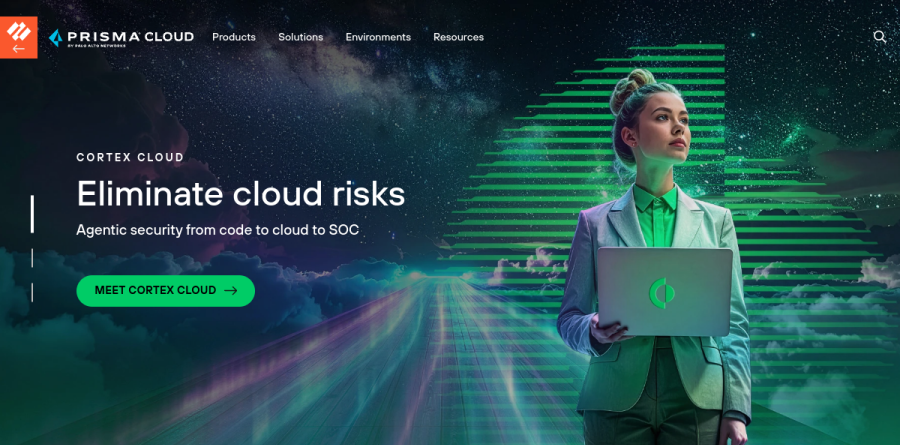
What is Prisma Cloud?
Prisma Cloud is the cloud native application protection platform from Palo Alto Networks, pitched on its product page as the Code to Cloud platform that secures apps from design to runtime. It is less a scanner than a set of modules organized around three stages the vendor labels code, infrastructure, and runtime, so a misconfigured Terraform file and a suspicious process on a live host land in one console.
Coverage spans AWS, Google Cloud, Microsoft Azure, Alibaba Cloud, and Oracle Cloud Infrastructure, reaching hosts, containers and Kubernetes, and serverless functions. Palo Alto Networks reports the platform analyzes a trillion events every 24 hours.
Catching risk in code before deployment

The code layer is where Prisma Cloud is most opinionated. IaC Security is built on the open source project Checkov, which Prisma Cloud augments with a simplified user experience and enterprise features, and inspects Terraform, CloudFormation, Kubernetes, Helm, ARM Templates, and the Serverless framework against hundreds of out of the box policies based on benchmarks such as CIS, HIPAA, and PCI.
Placement is what makes this usable. Native version control integrations comment on each new pull request with the issue and the fix, IDE and CI plugins surface the same feedback before a commit lands, and hard fails block severe problems from deploying. Secrets Security, CI/CD Security, and Software Composition Analysis round out the stage, catching credential leaks and vulnerable dependencies in the pipeline.
Posture management and entitlement control

Cloud Security Posture Management is the platform's agentless posture layer. It gives agentless visibility across multicloud accounts, and the vendor reports more than 3,000 built-in policies for detecting violations. Attack Path Analysis is the sharper tool, cross correlating misconfigurations, vulnerabilities, excessive permissions, and anomalous activity so a team can triage the chains that genuinely reach sensitive data.
Cloud Infrastructure Entitlement Management tackles permissions sprawl. Prisma Cloud calculates net effective permissions across users, compute instances, and cloud resources, monitors unused privileges, and issues least privilege recommendations. Identity provider integrations and remediation playbooks let a platform team rightsize over permissive roles without hand editing policy documents account by account.
Runtime defense and AI security posture
At runtime, Agentless Workload Scanning gives a fast inventory pass, while Host Security, Serverless Security, and Web Application and API Security defend running assets. Threat Detection is listed alongside them as a runtime capability on the Prisma Cloud platform page.
AI SPM is the platform's AI security posture management module. It performs AI app stack discovery, maps AI lineage across components and data sources, keeps a live model inventory, and watches for training data exposure and model misuse. Prisma Cloud Copilot lets an analyst ask about risk in plain language.
Editions, licensing, and the Cortex Cloud shift
Two editions exist. Prisma Cloud Enterprise Edition is the SaaS platform, offered either in a Standard form where you assemble capabilities a la carte, or as Cloud Security bundles named Foundations and Advanced. Prisma Cloud Compute Edition is self operated software you run in your own environment, including air gapped networks, focused on workload protection for hosts, containers, and serverless deployments.
Licensing runs on credits sold in increments of 100, sampled hourly, with the hourly samples averaged to create daily samples. There is no self serve checkout, though a 30 day trial is available by request. Note that the Prisma Cloud page now leads with Cortex Cloud, which Palo Alto Networks positions as the next version of this CNAPP paired with cloud detection and response.
Who should choose Prisma Cloud
Prisma Cloud fits multicloud enterprises with a dedicated security function, a real DevOps pipeline, and a mandate spanning build time and runtime. Organizations already invested in Palo Alto Networks tooling get the most leverage, and regulated or air gapped operations are among the few that truly need Compute Edition.
It is not ideal for small teams or single cloud startups who want to sign up with a card and see a published rate. Everything routes through sales, credit based licensing demands capacity planning, and the shift toward Cortex Cloud means new buyers should confirm which platform they are signing for.
Strengths
- Very broad module set: CSPM, CWPP, CIEM, DSPM, AI-SPM, KSPM, code security
- True code-to-cloud coverage from IaC/CI-CD build to runtime defense
- Offers self-hosted Compute Edition for regulated/air-gapped environments
- Deep integration path into Cortex XSIAM SOC platform and AI automation
Watch out for
- No public pricing; quote-only credit model makes budgeting hard
- Complex to deploy and tune; steep learning curve vs agentless rivals
- Credit consumption scales unpredictably with workloads and resources
- Mid-rebrand to Cortex Cloud adds roadmap and licensing uncertainty
Key features
| Feature | What it does |
|---|
| Multi-module CNAPP | CSPM, CWPP, CIEM, DSPM, AI-SPM, KSPM and code security unified in one platform |
| Code-to-cloud security | IaC scanning, CI/CD, secrets and SCA at build; threat detection and runtime defense in production |
| Multi-cloud support | Secures AWS, Microsoft Azure, Google Cloud, Oracle Cloud (OCI) and Alibaba Cloud |
| Two deployment models | SaaS Enterprise Edition or self-hosted Compute Edition for air-gapped/regulated workloads |
| Runtime protection | WAAS plus container, host and serverless runtime defense |
| Credit-based licensing | Workload/Cloud Security credits let teams license individual modules or full CNAPP bundles |
How Prisma Cloud compares
| Alternative | How it differs |
|---|
| Wiz | Agentless, graph-first CNAPP; also quote-only; faster deployment, less module depth |
| Orca Security | Agentless SideScanning CNAPP; simpler onboarding, positioned as lower-friction alternative |
| Microsoft Defender for Cloud | Native Azure/multi-cloud CNAPP with transparent per-resource/hour pricing |
Frequently asked questions
How much does Prisma Cloud cost?
There is no public price. Prisma Cloud is quote-only and credit-based, licensed via annual contracts. Third-party estimates put CSPM around $18,000/year to start and a full CNAPP suite near $45,000/year, at roughly $1.20 per credit, with professional services adding $10,000-$30,000+. Actual cost depends on workloads and negotiated volume discounts.
Is Prisma Cloud free?
No, there is no permanent free tier. Palo Alto Networks offers an official 30-day free trial that includes CSPM, CWPP, code security, WAAS, CIEM and cloud network security. After the trial, all usage moves to a paid, sales-quoted credit-based annual contract. You onboard a cloud account and set an alert rule to begin.
Prisma Cloud vs Wiz: which is better?
Both are enterprise CNAPPs with quote-only pricing. Wiz is agentless and graph-first, prized for fast deployment and low friction. Prisma Cloud offers deeper module breadth (CSPM, CWPP, CIEM, DSPM, code security) plus a self-hosted Compute Edition. Palo Alto shops gain tight Cortex XSIAM integration; teams wanting quick agentless coverage often prefer Wiz.
Is Prisma Cloud being renamed to Cortex Cloud?
Yes, partly. In February 2025 Palo Alto Networks began folding Prisma Cloud into Cortex Cloud, with Cortex Cloud 2.0 released in October 2025 adding deeper Cortex XSIAM SOC integration and AI agents. CNAPP capabilities are retained and existing customers are transitioned, so it is a rebrand and consolidation, not a discontinuation.
What is Prisma Cloud used for?
Prisma Cloud is a cloud-native application protection platform (CNAPP) that secures multi-cloud environments from code to runtime. It combines posture management (CSPM), workload protection (CWPP), entitlements (CIEM), data and AI security, and code/IaC scanning across AWS, Azure, GCP, OCI and Alibaba Cloud in one platform.
Prisma Cloud ratings on other platforms
Independent user ratings from third-party review sites, linked here for transparency.
These are not our editorial score, are captured on the date shown, and may have changed since.