The full review
What is Semantic Scholar?
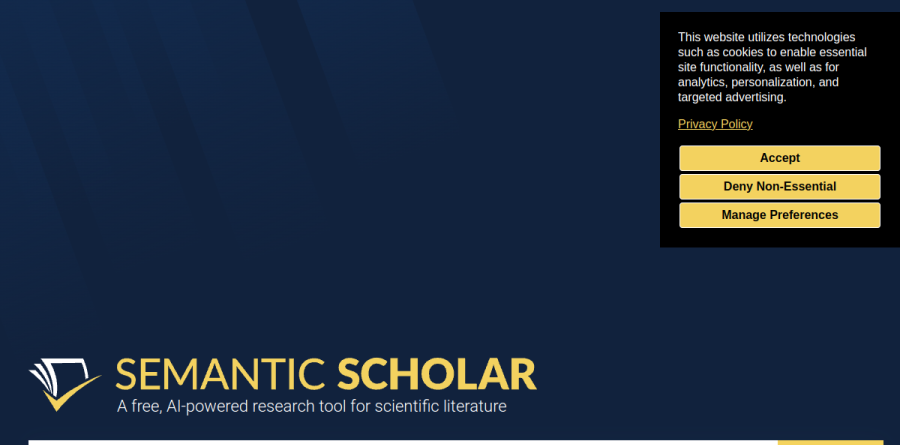
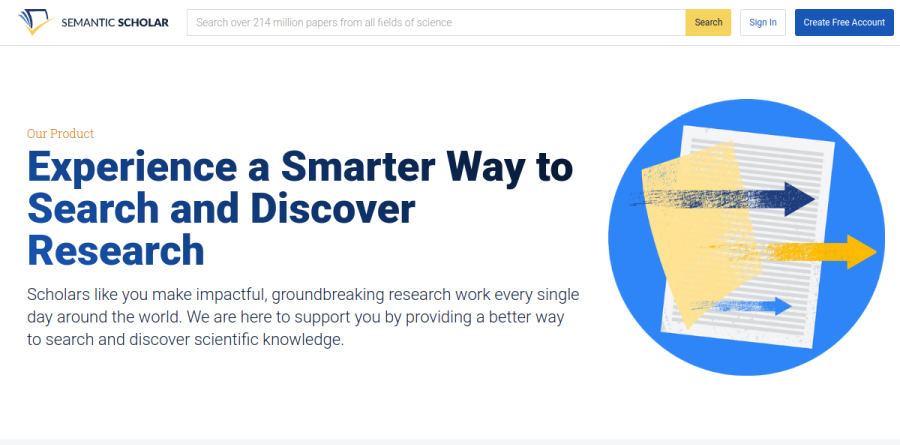
Semantic Scholar is a free academic search engine built by Ai2, described on its own homepage as an AI-powered research tool for scientific literature. The counter there reports 237,419,887 papers from all fields of science, and the FAQ states you do not need to create an account to access papers, though it also notes that some articles are only available on the publisher's site behind paywalls.
What separates Semantic Scholar from a plain index is the machine-learning layer over the citation graph. It generates short summaries, marks which references genuinely shaped a paper, and exposes the same corpus through a public API. The FAQ is explicit that no account is needed to read papers; signing in adds a library, alerts, and recommendations.
Search that surfaces citation context
Search covers the expected filters for journals, conferences, authors, publication types, and date range. The interesting part is what Semantic Scholar layers onto results. TLDRs, the vendor shorthand for Too Long; Didn't Read one-line summaries, cover work in computer science, biology, and medicine, with coverage the vendor reports as approaching 60 million papers.
Highly Influential Citations is the sharper differentiator: it flags references a paper actually leaned on rather than merely listed, turning a raw citation count into something you can triage. Export sits inline with BibTeX, MLA, APA, and Chicago formats.
Semantic Reader changes how papers get read

Semantic Reader, listed as a beta and available for most arXiv papers in the corpus, renders a PDF with Citation Cards that expand a reference in place, a Table of Contents for jumping between sections, and Definitions On-Demand that resolve an unfamiliar acronym from surrounding context.
Skimming Highlights apply AI-generated highlighting labeled Goal, Method, or Result, and the vendor lists them as available on most English-language arXiv papers in computer science fields, which pays off when you are triaging candidates for a literature review. Annotation runs through a Hypothesis integration, Save to Library keeps the paper within reach, and the vendor cites improved mobile and assistive-technology support as a design goal.
Library, Research Feeds, and alerts
Signed-in use is where Semantic Scholar stops being a lookup tool and becomes a workflow. Library stores papers in custom folders, supports bulk citation export, and lets you share a public folder with collaborators. Research Feeds hang off those folders and produce AI-powered recommendations that sharpen as you rate them, in the app or by email.
Alerts cover new citations to a paper, new work from an author, and Research Feed updates, and authors can claim an author page. The Research Dashboard consolidates recommendations and alert activity into one signed-in screen, while Scholar's Hub supports open-ended browsing through Trending Papers, Top Viewed Papers, Top Saved Papers, and curated Semantic Scholar's Picks.
An open API for developers and data teams
Developers reach the same corpus through the Semantic Scholar API, promoted on the homepage as newly improved with paper search, better documentation, and increased stability. Three services are documented: the Academic Graph API for papers, authors, and citations; the Recommendations API; and the Datasets API for bulk retrieval.
The Public API works without credentials against a shared pool the site describes as 1000 requests per second across all unauthenticated traffic, which means unpredictable throughput. An API Key gives you an authenticated lane, with the vendor noting that the introductory rate limit for an API key is 1 RPS on all endpoints. Around the endpoints sit open assets including S2ORC, S2AG, SPECTER2 embeddings, and SUPP.AI.
Who should choose Semantic Scholar
Semantic Scholar suits researchers, graduate students, librarians, and science writers who need broad literature coverage without an institutional subscription, and developers who want a citation graph they can query openly. Computer science, biology, and medicine are the best-served fields, since TLDRs concentrate there, Topics is currently limited to computer science, and Semantic Reader depends on arXiv availability.
It is not ideal for teams needing reference-manager depth, meaning shared annotation libraries, word-processor plugins, and PDF sync across devices, since none of those appear in the Library feature set, and the vendor notes that Ask This Paper has been tested only on English-language papers and is available on limited papers. Treat Semantic Scholar as the discovery and reading layer, and keep a dedicated manager for the writing end.
Strengths
- Completely free with no premium tier, paywalls, or usage fees
- Massive corpus of 200M+ papers spanning every discipline, backed by non-profit Ai2
- TLDR auto-summaries and Semantic Reader speed up screening and reading
- Robust free Academic Graph API and open datasets that power much of the wider research-tool ecosystem
Watch out for
- Not a true synthesis/answer engine - it surfaces papers but won't compose cited, multi-paper answers the way Elicit or Consensus do
- Semantic Reader is still beta with strongest coverage for CS/arXiv and weaker support for other fields and non-English work
- Full text is limited to open-access papers; many results link out to paywalled publisher sites
- Authenticated API rate limits are modest (introductory ~1 req/sec) and require an application, constraining large-scale projects
Key features
| Feature | What it does |
|---|
| AI-powered search | Semantic search across 200M+ papers with filters for authors, venues, year, and field of study. |
| TLDR summaries | Auto-generated one-line abstracts that let you triage papers without opening each one. |
| Semantic Reader | Augmented PDF reader with inline citation cards, on-demand definitions, and AI highlights (beta). |
| Academic Graph API & datasets | Free REST API and bulk datasets exposing papers, citations, authors, and SPECTER2 embeddings for building research apps. |
How Semantic Scholar compares
| Alternative | How it differs |
|---|
| Consensus | AI answer engine that synthesizes findings across papers into cited summaries; freemium with paid tiers, unlike Semantic Scholar's pure discovery focus. |
| Elicit | AI research assistant that extracts and tabulates data across studies for systematic reviews; paid tiers beyond a limited free plan. |
| Scite | Citation-analysis tool showing whether citations support or contrast a claim; subscription-based, more specialized than Semantic Scholar's free graph. |
Frequently asked questions
Is Semantic Scholar really free?
Yes. It is a non-profit service run by the Allen Institute for AI (Ai2). The web app, search, AI summaries, Semantic Reader, and the Academic Graph API are all free, with no paid or premium tier.
Does it answer questions or write literature reviews like ChatGPT?
No. Semantic Scholar is primarily a search and discovery engine with per-paper AI summaries. For synthesized, cited answers across multiple papers, tools like Consensus or Elicit are a closer fit.
Semantic Scholar ratings on other platforms
Independent user ratings from third-party review sites, linked here for transparency.
These are not our editorial score, are captured on the date shown, and may have changed since.